
Where Wax Becomes Memory: Reflections on Our 2026 Pysanky Workshop
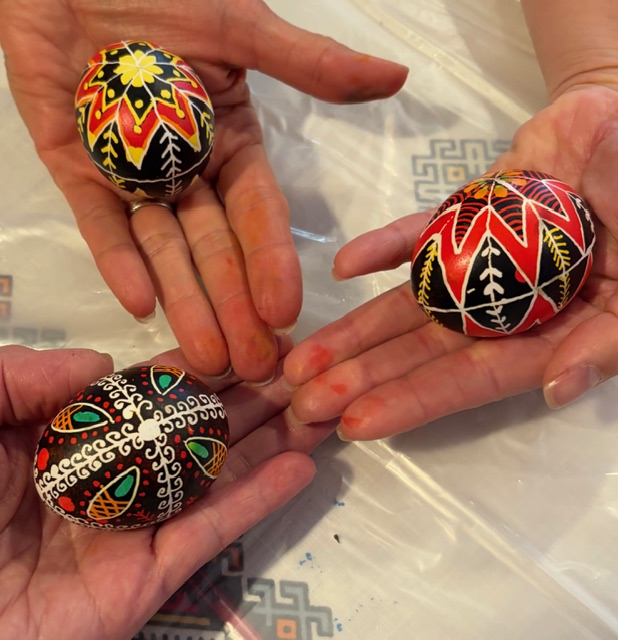
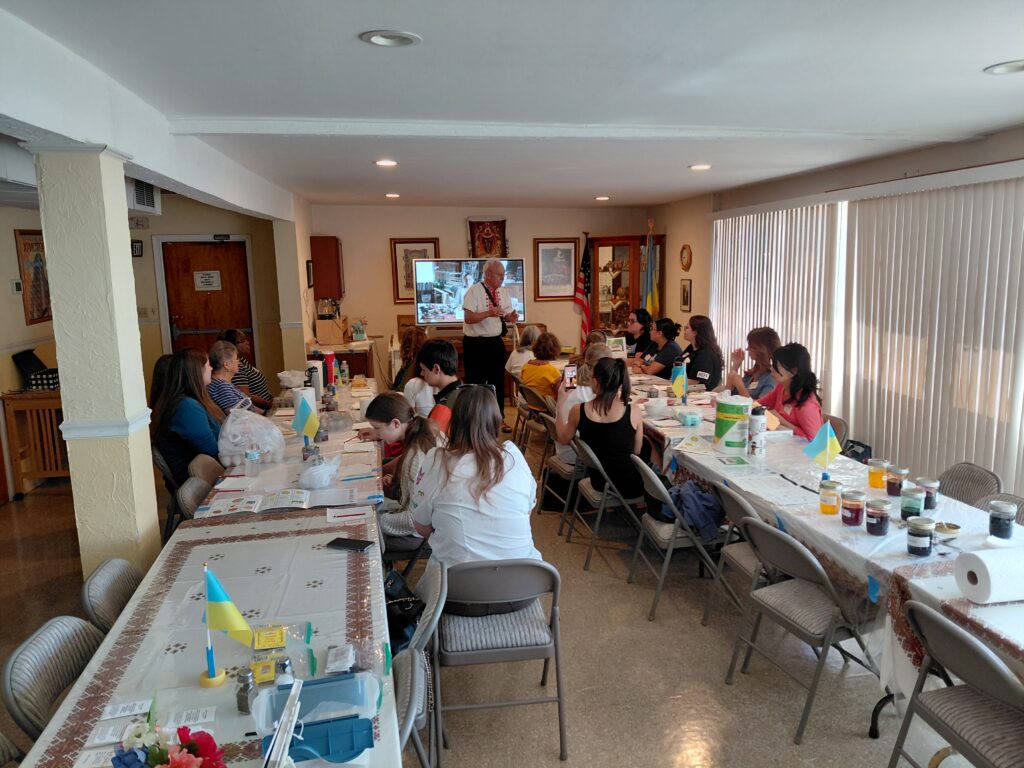
On March 21, 2026, our annual pysanky workshop gathered the Tucson community at St. Michael Ukrainian Catholic Church not only to learn a craft, but to step into a living tradition. Around the tables sat returning friends, curious newcomers, and first-time artists who discovered, with some surprise and great delight, that a plain egg can become a work of beauty when guided by patience, flame, wax, and care. What took place that day was more than an event. It was an act of cultural remembrance.
In Ukrainian culture, a pysanka is not simply decorated; it is written. The word comes from the verb pysaty, “to write,” and the design is built through a wax-resist process that layers meaning as it layers color. Traditional Ukrainian life treated the pysanka as more than an ornament: it belonged to a ritual world of protection, blessing, and well-being, and it was closely tied to spring, rebirth, and the mystery of life itself. The tradition reaches back to pre-Christian times, when the egg was associated with the sun and the renewal of nature; later, these older meanings were read through Christian faith and the Paschal season. In 2024, UNESCO inscribed “Pysanka, Ukrainian tradition and art of decorating eggs” on the Representative List of the Intangible Cultural Heritage of Humanity, affirming what Ukrainians have long known, that this art is one of the quiet centers of cultural memory.
That is why a pysanka can be read almost like a small cosmology. Its shell carries not just ornament, but a worldview. An eternity band speaks of harmony, infinity, and motion; triangles may evoke the Holy Trinity or the older pattern of earth, air, and water; birds call spring to mind; green suggests the resurrection of nature; yellow evokes sun, harvest, and warmth. Meanings vary by region and by century, but the central truth remains the same: a pysanka holds wishes, blessings, protection, and hope in visible form.
An old Ukrainian legend says that as long as people continue to make pysanky, the world itself will continue to endure; if the making stops, evil breaks loose. Folklore speaks in symbols, but some symbols survive because they tell the truth sideways. A pysanka is fragile, yet it stands against forgetting. It is small, yet it argues for continuity. In difficult times, that old legend no longer feels quaint. It feels like moral instruction: keep making, keep remembering, keep passing beauty from one hand to another.
This year, more than 25 participants joined us, and for several of them this was a first encounter with pysanky. By the end of the workshop, many were holding eggs that felt like small masterpieces. That is one of the quiet miracles of this tradition: beginners arrive thinking they are learning technique, and leave having touched inheritance. A room that begins in concentration ends in wonder, because the final act—when the wax is warmed away, and the hidden colors emerge—always feels a little like revelation.
No telling of this annual workshop would be complete without honoring Dr. Ihor Kunasz and his wife, Zenovia Kunasz, whose devotion, organization, and care have helped shape this gathering into one of the most beautiful expressions of Ukrainian culture in Tucson. Together, they do more than arrange an event; they create the atmosphere in which tradition can be taught with dignity, warmth, and generosity. Dr. Kunasz learned pysanky from his mother, began practicing as a teenager, and has carried the tradition for decades through family teaching, community workshops, church events, and public demonstrations at Tucson Meet Yourself. In 2025, the Southwest Folklife Alliance profiled him as a master artist who learned by candlelight and continues to pass this art to new generations. His many years of experience do not make the tradition feel old; they make it feel alive.
It is hard not to think here of Lina Kostenko. One of the great voices of the shistdesiatnyky, Kostenko joined lyric intensity to historical conscience and to a deep sense of the moral responsibility of language. In works such as On the Banks of the Eternal River and Marusia Churai, history is never merely the past; it is something carried forward in word, memory, and song. A pysanka belongs to that same way of seeing the world. One might say that what Kostenko does with words, the pysankarka does with wax: she protects fragility by giving it form, and saves memory by making it visible. Like the “eternal river” of Kostenko’s title, tradition keeps moving only when each generation adds its own current.
For our society, this is why the workshop matters. UAST exists to preserve traditions through arts, language, and history, to build cultural understanding in Tucson, and to join culture with compassionate action. Our annual pysanky workshop fulfills all of those aims at once. It teaches an ancient art, gathers generations around a shared table, invites newcomers into Ukrainian culture, and turns beauty into service, with proceeds benefiting humanitarian aid for Ukrainian war victims. So this year’s workshop should be remembered not simply as a successful afternoon, but as something deeper: a small, radiant proof that Ukrainian tradition remains alive wherever it is practiced with love. In Tucson, wax became line, line became symbol, symbol became memory, and memory became community. So long as we keep our culture and our language, our legacy does not fade; it lives in every remembered song, in every pysanka written by hand, and in every heart that refuses forgetfulness, and with that hope “…на оновленій землі врага не буде, супостата, а буде син, і буде мати, і будуть люде на землі”.